Slow Drain vs. Sewer Backup: How to Tell the Difference
4 min read · Schulze Plumbing Inc.
A kitchen sink that drains slowly and a toilet that overflows when the washing machine runs are not the same problem. One is often a local clog. The other usually means the main sewer line is restricted or failed. Sorting them out early helps you describe the job clearly when you request an estimate.
Start with how many fixtures are involved
One fixture. A single bathroom sink, shower, or tub that is slow — while every other drain in the house works — typically means a clog in that branch line or the fixture trap. Hair, grease, soap scum, and toothbrush caps collect close to the fixture. Drain cleaning for that line is often the first step.
Several fixtures at once. If the master bath toilet gurgles when you run the laundry, or a floor drain fills when you flush, the restriction is further downstream. That pattern points toward the building drain or the sewer lateral — the pipe that leaves the house and connects to the city main or septic.
Outdoor clues. Sewage smell near a cleanout, wet spots in the yard over the sewer run, or backups after heavy rain can also signal a main-line issue rather than a kitchen air gap full of grease.
What a slow drain usually is
Local clogs build over months. You notice the shower pooling at your ankles, then the tub takes longer to empty. A plunger or a carefully used drain snake can clear some of them. Chemical cleaners are hard on older South Bay drain materials and rarely fix a solid obstruction.
If the same fixture keeps slowing down after a clean, the line may have a sag, a broken fitting, or roots at a joint. That is when a camera look at that branch — or the main — becomes useful instead of another blind clean.
What a sewer backup usually looks like
A sewer backup is messier and more urgent:
- More than one fixture backs up or drains poorly on the same day
- The lowest fixture in the house (often a basement, laundry sink, or ground-floor bath) is the first to overflow
- Water comes up through a cleanout or floor drain
- You hear gurgling in toilets when other fixtures drain
Do not keep running water “to flush it through.” That pushes more volume into a blocked line. Shut off fixtures that are overflowing, keep people and pets away from contaminated water, and note which rooms were involved.
When a sewer camera helps
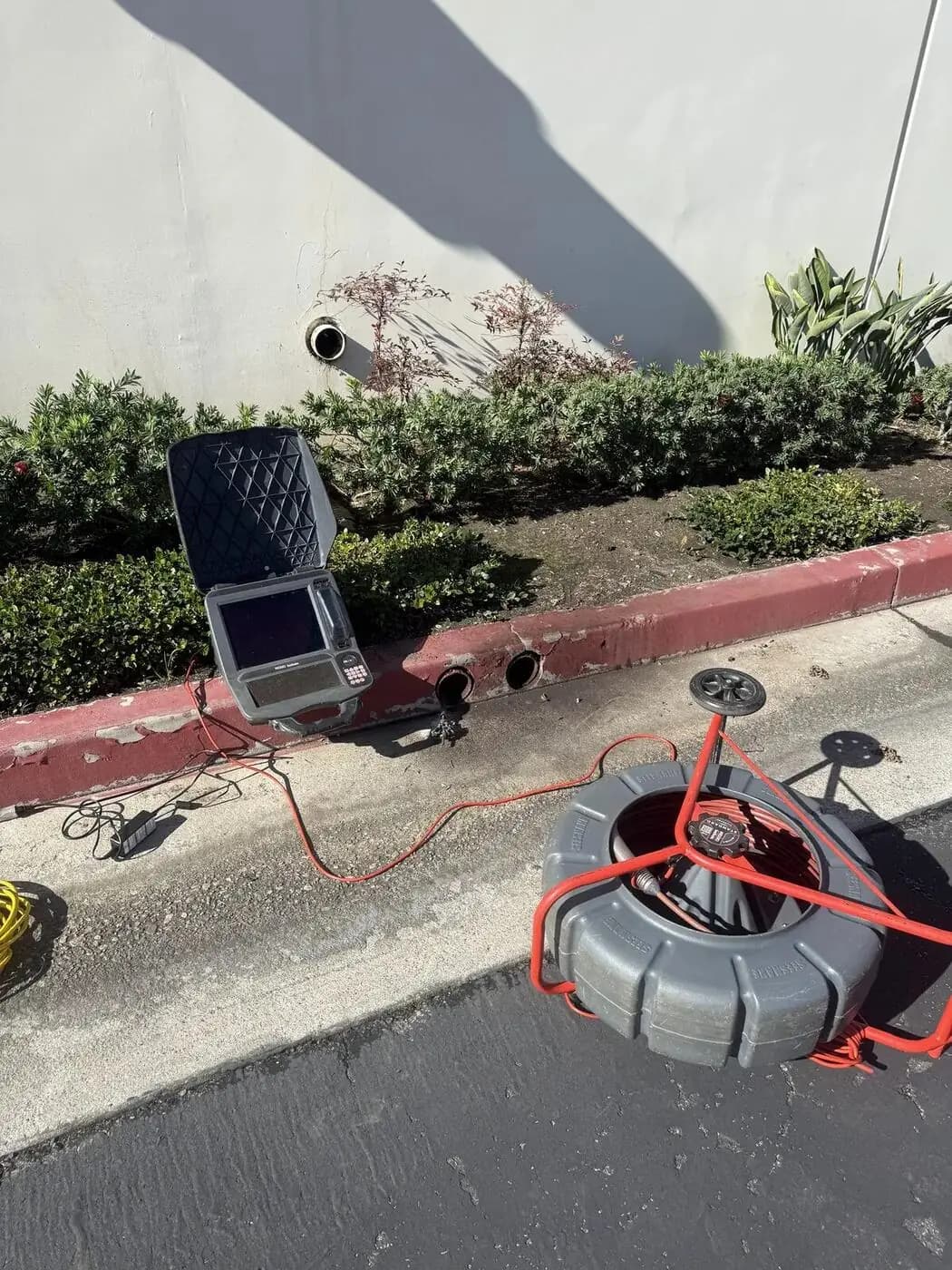
Cleaning clears soft buildup. It does not tell you if the clay lateral under a Torrance or Redondo Beach yard has an offset joint, a root ball, or a collapsed section. A sewer camera inspection records what is inside the pipe so repair or replacement is based on the actual condition — not a guess after another clean that fails in a week.
Bring any prior camera video or a written report when you request work. That shortens the conversation about sewer line repair or replacement.
What to tell the plumber
Clear details beat vague “my drain is slow” every time:
- Which fixtures are slow or backing up (one room vs. whole house)
- Whether the problem is constant or only when laundry, dishwasher, or multiple baths run
- Any cleanout location you know about (yard, garage, crawl space)
- Photos or video of the backup, if safe to take
- Your ZIP code so we can confirm South Bay coverage
Schulze Plumbing Inc. handles drain cleaning, camera work, and sewer repair for homes and businesses across the South Bay / Los Angeles County area. Share what you are seeing — we will follow up about next steps and an estimate.